
Inside Maison Margiela’s Fence-Swinging Chinese Spectacle
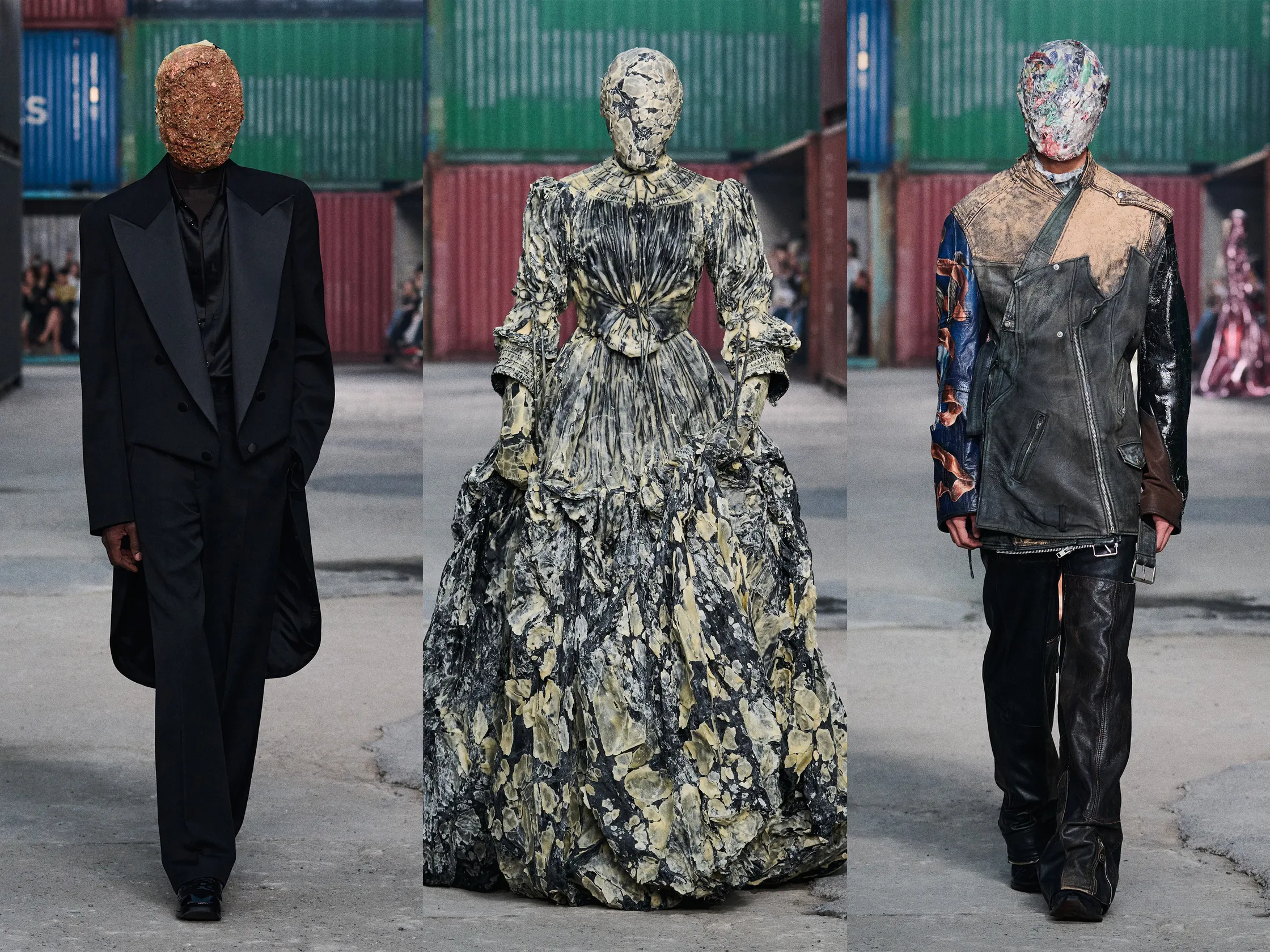
When Maison Margiela staged its Fall 2026 show in Shanghai, it wasn’t just a runway—it was theatre, cinema, and cultural strategy all at once. Set inside a vast industrial shipyard, the show unfolded like a stylized action film, complete with blacked-out vans, security entourages, and models moving through towering cargo containers. (GQ)
The “fence-swinging” energy came from this cinematic staging—raw, urban, and slightly chaotic—contrasting sharply with the precision of high fashion. It captured Margiela’s core identity: turning unconventional spaces into immersive fashion environments. This has always been part of the house’s DNA, known for staging shows in unexpected locations to challenge traditional runway norms. (Wikipedia)
At the center of it all was creative director Glenn Martens, who used the moment to introduce a collection that balanced extreme artistry with real-world wearability. There were dramatic pieces—like a nearly 200-pound ceramic dress and garments built from thousands of gold stickers—but also refined menswear: velvet tailoring, patchwork outerwear, and reworked workwear silhouettes. (GQ)
But the spectacle went beyond the runway. It launched “Maison Margiela Folders,” a multi-city project across Shanghai, Beijing, Chengdu, and Shenzhen. Each installation explored a different element of the brand—from archival couture to its iconic Tabi footwear—turning the entire country into an extended exhibition space. (GQ)
The strategy is clear: China isn’t just a market, it’s a cultural frontier. By merging performance, fashion, and public installations, Margiela wasn’t simply presenting a collection—it was building a deeper connection with a new generation of global tastemakers.
In true Margiela fashion, the spectacle felt disruptive yet controlled—where chaos meets craftsmanship, and fashion becomes something far bigger than clothing.
